Menu
Same-Day Service Available!
Hardwood floors can make a home feel warm, comfortable, and inviting. They work beautifully in living rooms, hallways, dining areas, bedrooms, and other spaces where families spend much of their day. However, keeping wood floors clean requires a little more care than simply grabbing a mop and the strongest cleaner in the cabinet.
Some cleaning habits that seem helpful can slowly affect the appearance or condition of hardwood. Too much water may work its way into seams. Steam introduces heat and moisture that wood floors do not need. Harsh chemicals can affect certain finishes, while layers of polish or soap may leave a dull film that attracts more dirt. Even aggressive scrubbing can create visible changes when the wrong tool is used.
For homeowners in Boerne, Texas 78006, understanding these risks can make everyday hardwood floor cleaning much easier. You do not need a complicated routine. Instead, the goal is to use the right amount of cleaning, choose products that suit the floor, and remove dirt before it has a chance to scratch or dull the surface.
Good maintenance is less about cleaning harder and more about cleaning appropriately. Routine sweeping, dust mopping, or vacuuming with a bare-floor setting can help reduce loose soil. Spills should be handled promptly with a dry or slightly damp cloth, while wet mops and steam mops are best avoided because repeated moisture exposure can create problems over time.
Professional hardwood floor cleaning can also help when normal maintenance is no longer removing accumulated soil or product residue. Safe-Dry® offers hardwood floor cleaning designed to address dirt and buildup while treating the flooring with care.
Knowing which methods to avoid can help Boerne families protect their floors while keeping the home clean, comfortable, and ready for everyday life.
One of the most common hardwood cleaning mistakes is using too much water. It makes sense why homeowners do it. Water helps clean many household surfaces, and a heavily soiled floor may seem as though it needs a wetter mop to become truly clean.
Wood flooring is different.
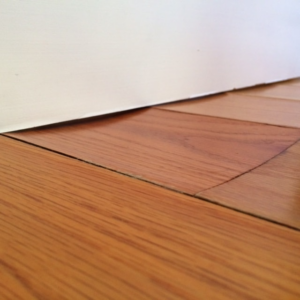
Hardwood is made from a natural material that can react to moisture. Most finished floors have a protective surface, but that does not mean they should be flooded or repeatedly soaked. Liquid can settle around plank edges, enter small seams, or reach worn sections of the finish.
A very wet mop may leave water sitting on the floor longer than expected. The top can appear dry after a while, yet moisture may have already reached areas where it is harder to evaporate.
Over time, excessive exposure can contribute to changes in the flooring. Depending on the floor and the extent of the moisture, boards may swell, edges may change, or the finish may begin looking different.
This does not mean water can never touch hardwood. Spills are part of normal family life. A drink tips over, a pet splashes water around its bowl, or someone walks inside with wet shoes. The key is cleaning those situations quickly instead of allowing moisture to sit.
For routine hardwood floor cleaning, use controlled moisture rather than a dripping mop. A slightly damp approach is usually much easier on the floor.
Families in Boerne can make a simple change by wringing cleaning pads or mops thoroughly before they touch the floor. If water is visibly pooling behind the mop, there is probably more moisture than necessary.
Steam cleaning has become popular for many household surfaces because it feels powerful. Heat and moisture can loosen buildup, which makes steam seem like an obvious choice when a hardwood floor looks dull.
The problem is that wood is not the same as tile.
Steam introduces both heat and moisture. Depending on the floor, finish, seams, and existing wear, that combination may reach places where homeowners do not want additional moisture.
A steam mop can also create a false sense of safety because the floor may not look soaked. The visible moisture can evaporate quickly, yet repeated steam exposure can still affect wood and finish over time.
This is especially important when older hardwood has small gaps or areas where the finish has worn down. Those sections may respond differently from newer, well-protected boards.
Professional hardwood floor cleaning does not need to rely on flooding or steaming the flooring. A good service focuses on removing the soil and buildup affecting the appearance while controlling the amount of moisture used.
Deep cleaning should make the floor easier to maintain, not expose it to unnecessary stress.
A stronger cleaner does not always produce a cleaner floor.
Homeowners often reach for powerful household chemicals when they see stubborn marks or sticky residue. A product may work well on one surface and still be completely wrong for finished wood.
Certain cleaners can affect the sheen or appearance of a floor finish. Others may leave a film behind. Products designed for bathrooms, kitchens, tile, or other hard materials may not be intended for hardwood at all.
The safest approach is to use a product approved for the specific flooring and finish.
Reading labels matters too. Homeowners should check which surfaces a cleaner is compatible with, use the correct dilution, and avoid mixing household cleaning products.
Mixing cleaners is especially risky. Homeowners sometimes combine products because one cleaner did not deliver the desired result. Doing this can create harmful vapors, and the combined chemicals may also affect the surface being cleaned.
Instead of escalating to stronger products, stop when a stain or buildup is not responding. A professional hardwood floor cleaning service may be the safer next step.
Sometimes the problem is not the type of cleaner. It is simply the amount being used.
If a little cleaner works, it is tempting to assume that more will work better. However, excess product may remain on the floor after cleaning. Over time, those small amounts can build into a noticeable film.
This residue can make hardwood look hazy, cloudy, or streaked.
Homeowners may mistake the dull appearance for dirt and respond by adding even more cleaner. The cycle continues until the floor becomes increasingly difficult to maintain.
Residue can also attract everyday soil. Dust, pet hair, and tracked-in particles may cling to a sticky surface instead of being removed easily during routine cleaning.
The solution is not always another coat of product.
Sometimes the floor needs existing buildup removed.
Professional hardwood floor cleaning can be especially useful in this situation because the goal is to clean away unwanted residue rather than simply cover it.
Safe-Dry® focuses on practical cleaning methods that help families maintain cleaner surfaces without relying on heavy product buildup.
Vinegar is one of the most common DIY cleaning recommendations people hear about. It is inexpensive, easy to find, and useful for certain household tasks.
However, a homemade solution should not automatically be considered appropriate for every hardwood floor.
Wood finishes vary. What works on one floor may not be recommended for another. Homemade mixtures also make it easier to use concentrations that were never tested or approved for the flooring.
A common mistake is assuming that because vinegar is considered a familiar household product, it cannot affect the surface. Hardwood flooring care should be based on the requirements of the finish rather than the popularity of a DIY recipe.
If the flooring manufacturer or professional who installed the floor recommends a particular cleaner, follow that guidance.
Using a product made specifically for the flooring can remove much of the guesswork.
For families in Boerne, this is an easy way to keep hardwood floor cleaning simple. You do not need to experiment with several mixtures when a floor-appropriate product and regular dry maintenance may be enough.
Sticky spots sometimes make homeowners want to scrub as hard as possible.
Unfortunately, aggressive scrubbing can turn a small cleaning problem into a visible flooring issue.
Rough pads, stiff brushes, abrasive sponges, and harsh scrubbing powders can scratch or change the surface of certain finishes. Even when the mark disappears, the cleaned section may end up looking different from the rest of the room.
The better approach is patience.
Start by removing loose dirt. Then use a suitable cleaner and a soft microfiber cloth or pad. Give the product only the amount of time recommended on its label.
If the spot remains, resist the urge to attack it with a more abrasive tool.
A trained professional can evaluate whether the problem is surface soil, old product residue, staining, finish damage, or something else entirely.
Cleaning cannot repair every type of damage. Sometimes a spot that looks dirty is actually an area where the finish has changed.
Recognizing this difference can prevent homeowners from overcleaning an area that needs another type of care.
Not all hardwood damage comes from cleaning products.
Sometimes the problem starts because loose dirt is left on the floor before wet cleaning begins.
Sand, grit, and other small particles can act like abrasive material beneath shoes, chair legs, cleaning pads, or mop heads. Moving those particles back and forth across the floor can contribute to fine scratches.
This is why dry soil removal should come first.
Sweep, dust mop, or vacuum with a suitable bare-floor attachment before using any damp cleaning method.
Entryways deserve extra attention because they receive the highest amount of tracked-in material. Homes in Boerne can collect dust and outdoor debris quickly, especially when family members, pets, or guests move in and out throughout the day.
A mat placed near commonly used entrances can help catch some of this soil before it reaches the hardwood.
Regular vacuuming also helps.
If your vacuum has a rotating brush designed primarily for carpet, check the manufacturer's instructions before using it on wood. A bare-floor mode or suitable hard-floor attachment is generally the better choice.
The purpose is simple: remove gritty particles instead of dragging them across the finish.
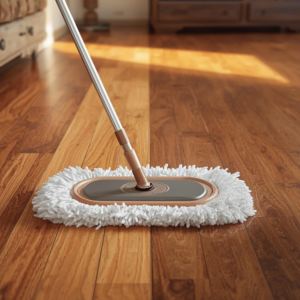
A mop can look clean enough while holding more dirt than you realize.
Reusable pads collect soil as they move across the room. Once the material becomes loaded, the mop may begin redistributing that soil instead of lifting it away.
This can leave streaks or a dull appearance.
Large hardwood areas may require more than one clean pad during a single cleaning session. If the pad becomes visibly dirty, replacing or rinsing it before continuing can improve the result.
The cleaning solution can also become contaminated when a traditional mop is repeatedly dipped into the same bucket.
Instead of transferring clean solution to the floor, the homeowner may eventually be spreading dirty water across the room.
Simple changes make a difference. Start with clean tools, replace dirty pads as needed, and wash reusable microfiber materials after use.
Clean equipment supports cleaner floors.
A shiny product may seem like the perfect solution for hardwood that has lost some of its original glow.
However, polish and wax should not automatically be used on every type of wood floor.
Modern finishes vary widely. Adding a coating that is not recommended for the floor can lead to uneven shine, haze, slippery areas, or buildup that becomes difficult to remove later.
The floor may look glossy at first, which makes the product seem successful. After several applications, however, homeowners can begin noticing streaks or a cloudy layer.
Adding more polish usually does not solve accumulated residue.
Before using any shine-restoring product, identify the floor finish and follow the flooring manufacturer's recommendations.
A dull surface may simply need professional cleaning. In other situations, the finish itself may be worn and require recoating rather than another layer of household polish.
Cleaning and refinishing are different services. Knowing which one the floor needs prevents wasted effort.
Pets add plenty of happiness to a home, but accidents can create special challenges for hardwood floors.
Urine, water, and other liquids should not remain on the surface longer than necessary. Quick cleanup helps reduce the opportunity for moisture to move toward seams or worn sections.
Start by blotting rather than flooding the area.
Use an absorbent cloth to remove as much liquid as possible. Then clean the surface with a product suitable for the floor. Dry the area afterward instead of leaving it damp.
Repeated accidents require extra attention.
A pet may return to the same location near a door, rug, feeding area, or favorite resting spot. Over time, repeated moisture exposure can create a more complicated problem than one isolated accident.
Pet odor removal can also extend beyond the hardwood.
If the accident happened near a rug or carpet transition, check those surfaces too. Urine may have reached rug backing or carpet fibers before the homeowner noticed it.
Professional pet stain removal, pet urine removal, or pet odor removal may be appropriate when the smell continues after routine cleanup.
Hardwood floor cleaning can address residue on the wood surface, while pet urine carpet cleaning may be needed if contamination also reached a nearby soft floor.
Area rugs are useful because they can reduce wear in high-traffic spaces. However, they also create areas that homeowners cannot see during normal cleaning.
Fine dirt can collect underneath a rug. If those particles remain for long periods, movement between the rug and floor may contribute to scratching.
Moisture creates another concern.
A drink spill or pet accident can pass through a rug and reach the hardwood underneath. The top of the rug may dry while the hidden surface remains damp.
For this reason, lift area rugs periodically and clean underneath them.
If a spill occurs, check both the rug and the floor.
Area rug cleaning may be necessary when the rug has absorbed a significant amount of soil or pet contamination. Oriental rug cleaning may require specialized care because delicate materials, dyes, and construction can react differently from standard area rugs.
Never return a damp rug to hardwood.
Allow both surfaces to dry completely first.
This small habit can help protect the floor while also keeping the home fresher.
Homes rarely contain only one flooring type.
A hardwood living area may connect to carpeted bedrooms. Stairs may be carpeted while the hallway is wood. Rugs may bridge both surfaces.
This means good floor care sometimes involves more than hardwood floor cleaning.
Carpet can hold loose dust, pet hair, soil, and other particles that later travel onto hard surfaces. Keeping carpet cleaner can reduce some of the debris moving throughout the home.
Professional carpet cleaning is especially helpful when vacuuming no longer restores the appearance of high-traffic sections.
Safe-Dry® uses a low-moisture carpet cleaning process designed to clean without leaving the carpet heavily saturated. The method also avoids sticky soap residue and supports faster drying.
Someone searching for carpet cleaning Boerne, carpet cleaners Boerne Texas, or carpet cleaning near you may also want to ask about nearby hardwood areas during the appointment.
A whole-home approach can make routine maintenance easier because each flooring surface receives the method designed for it.
A product designed for carpet should remain on carpet unless its label clearly states otherwise.
Carpet cleaning solutions are formulated for fibers, not necessarily for finished wood.
The same principle applies to pet stain products. A pet odor eliminator designed for carpet is not automatically safe for hardwood.
Homeowners sometimes reach for whatever cleaner is nearby because the accident needs quick attention. While fast cleanup is important, the wrong product can leave residue or affect the floor's appearance.
Keep separate cleaning supplies for different surfaces when possible.
Labeling them can help family members avoid grabbing the wrong bottle during a spill.
If your home includes several flooring types, a simple cleaning cabinet with clearly separated products can prevent mistakes.
Many people associate a powerful fragrance with cleanliness.
A floor can smell strongly of lemon, pine, or another scent while still carrying residue.
The opposite is also true. A cleaner does not need an intense odor to work effectively.
Using more fragranced product can contribute to unnecessary indoor buildup. It is better to follow product labels, use ventilation where appropriate, and avoid mixing household cleaners.
A clean floor should feel fresh because soil and buildup were removed, not because the room is overwhelmed by fragrance.
Ventilation can also help during and after cleaning. Opening windows or increasing airflow, when conditions allow, can make the space feel more comfortable.
This family-friendly approach keeps the focus on effective cleaning rather than stronger smells.
Begin with sweeping, dust mopping, or vacuuming on an appropriate bare-floor setting.
Pay extra attention to entryways, hallways, dining areas, and paths around furniture. These spaces tend to collect more soil because people and pets travel through them frequently.
Removing loose grit before damp cleaning helps prevent particles from being dragged across the finish.
Look for spills, sticky sections, pet marks, scratches, or areas that seem duller than the rest of the room.
Not every spot needs the same treatment.
A loose crumb can be vacuumed. A fresh spill should be blotted. An area covered in product residue may need a more careful cleaning approach.
Taking a moment to inspect the floor can prevent unnecessary wetting.
Use a cleaner recommended for the type of wood floor and finish in your home.
Read the label carefully.
Avoid assuming that a general-purpose cleaner is suitable just because it says it works on hard surfaces.
Hardwood has different needs from tile, laminate, vinyl, carpet, and stone.
Apply the cleaner according to its directions instead of soaking the floor.
A cleaning pad should not leave puddles or standing water behind.
If the floor looks visibly wet for an extended period, reduce the amount of liquid being used.
Controlled moisture is one of the simplest ways to protect hardwood during regular maintenance.
Clean one section at a time.
This makes it easier to see whether too much moisture is being used and prevents cleaning solution from sitting on the floor while you move to another part of the room.
Working methodically also helps avoid missed sections.
Check the cleaning pad as you move through the room.
Once it becomes heavily soiled, replace it with a clean one.
Continuing with a dirty pad can spread soil and leave the floor looking streaked.
Do not allow water, drinks, pet accidents, or other liquids to sit on hardwood.
Blot the spill with an absorbent cloth.
Then use the correct floor cleaner if needed.
Dry the area when you are finished.
If the floor remains dull, sticky, streaked, or coated after proper household care, stop adding more products.
Old residue may need deeper removal.
Professional hardwood floor cleaning can provide a more complete reset without relying on aggressive DIY methods.
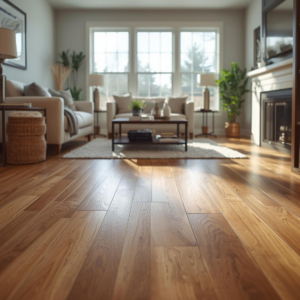
Hardwood often provides clues when a cleaning routine is not working.
Frequent streaks can indicate too much product, dirty cleaning pads, or residue.
A hazy appearance may develop when several layers of cleaner or polish remain on the surface.
Sticky areas can attract dirt quickly, making freshly cleaned floors look dirty again within a short time.
Visible moisture lingering along plank seams is another warning sign.
Repeated use of a wet mop should be reconsidered before moisture creates a larger issue.
Fine scratches may point to abrasive tools or gritty debris being moved across the floor during cleaning.
Uneven shine can happen when polish, wax, or aggressive scrubbing affects one part of the surface differently from another.
When these signs appear, adding stronger cleaner is rarely the best first response.
Simplify the routine.
Remove loose soil, use a floor-appropriate product sparingly, and seek professional advice when the problem continues.
Even a careful homeowner can eventually deal with buildup.
Everyday foot traffic carries fine dirt into the house. Pets leave hair and paw residue. Cooking can contribute airborne particles. Children spill drinks. Furniture creates hard-to-reach edges. Household cleaners sometimes leave behind more product than expected.
Over months and years, these small layers can make hardwood look different.
Professional hardwood floor cleaning is useful when regular maintenance can no longer remove this accumulated material.
The purpose is not to sand away the floor.
A professional cleaning focuses on removing soil and buildup from the existing surface.
For Boerne families, this can be particularly helpful before hosting guests, moving into or out of a home, refreshing high-traffic rooms, or simply trying to make routine maintenance easier again.
Professional technicians can also help homeowners understand whether they are dealing with removable buildup or a finish that has experienced actual wear.
This distinction matters.
Cleaning can improve dirt and residue. It cannot restore every scratch, worn finish, discoloration, or moisture-related change.
Setting realistic expectations helps homeowners make better decisions about their floors.
Family homes experience more activity, which means the floor often needs more frequent light maintenance.
Children carry crumbs from room to room. Toys move across the surface. Pets bring in outdoor soil, shed hair, and occasionally spill water around bowls.
None of this means hardwood is a poor choice for busy households.
The key is keeping small messes from becoming larger cleaning problems.
Place mats near entrances.
Clean up liquid quickly.
Use protective pads beneath furniture legs.
Trim pet nails as recommended to reduce scratching.
Place a suitable mat under food and water bowls.
Vacuum or sweep more frequently in high-traffic spaces rather than waiting until the entire floor looks dirty.
A family-first cleaning routine should be simple enough to maintain.
Short, frequent care is usually easier on wood floors than occasional aggressive cleaning.
The phrase "deep cleaning" sometimes makes homeowners picture powerful chemicals, steaming equipment, and lots of water.
Effective deep cleaning services do not have to work that way.
For hardwood, deeper cleaning should still respect the material.
The goal is removing accumulated soil and residue that normal maintenance leaves behind.
Safe-Dry® focuses on cleaning methods designed around the surface being treated. Hardwood receives a different approach from carpet, upholstery, or rugs.
The same principle applies throughout a healthy home.
Professional carpet cleaning should suit carpet fibers. Upholstery cleaning should consider the fabric. Area rug cleaning should match the rug construction.
Using the right process for each surface is much safer than assuming one strong cleaning method can be used everywhere.
Sometimes a homeowner begins by worrying about a hardwood floor and later realizes the odor problem extends into nearby carpet or rugs.
Pet urine can cross flooring boundaries easily.
An accident near a doorway may reach both hardwood and carpet. A rug may absorb liquid before it reaches the wood beneath it. Pet bedding beside the affected area can hold odor too.
If a smell remains after the hardwood is properly cleaned, inspect surrounding surfaces.
Pet urine removal, cat urine removal, dog urine removal, or pet stain and odor removal may be appropriate depending on the problem.
Professional carpet cleaning can help when soft flooring is involved.
Carpet odor removal and urine odor removal should focus on the source instead of simply adding fragrance.
A homeowner who wants to remove pet smell from carpet should explain the accident history when requesting a carpet cleaning estimate. Repeated contamination can require a different approach from routine soil removal.
Families planning several home cleaning projects often compare carpet cleaning prices, hardwood service costs, rug cleaning, and upholstery cleaning at the same time.
The exact carpet cleaning cost can depend on the size and condition of the flooring, along with any specialized treatment needed.
Pet stain removal, odor elimination, or difficult carpet stain removal may affect the service plan.
This is why a carpet cleaning estimate can be more useful than choosing a company based only on a promotional price.
Cheap carpet cleaning does not automatically mean good value if the process does not match the flooring or leaves behind excessive moisture or residue.
Affordable carpet cleaning should still be professional, clear, and appropriate for the home.
Homeowners can also ask about current carpet cleaning deals, carpet cleaning specials, or carpet cleaning coupons when available.
The goal should be finding the right service rather than the strongest product or lowest advertised number.
Homeowners searching for the best carpet cleaning, top rated carpet cleaning, certified carpet cleaning, or insured carpet cleaning often look at reviews and service descriptions before scheduling.
The same care should apply when selecting hardwood floor cleaning.
Ask about the process.
Find out how the company controls moisture.
Explain any existing dullness, residue, pets, scratches, or previous cleaning products.
Ask whether the service is cleaning only or whether the floor appears to need another type of treatment.
Clear communication helps everyone understand what can realistically be improved.
If you are also considering carpet cleaning services, mention all surfaces during the initial conversation. This can be useful in homes where hardwood, rugs, upholstery, and carpet share the same high-traffic areas.
Someone searching for carpet cleaner near you or carpet cleaners near you may ultimately benefit from a company capable of addressing several household surfaces with methods suited to each material.
A last-minute spill, unexpected guests, moving plans, or another household situation may create interest in same day carpet cleaning or emergency carpet cleaning.
Speed can be helpful, but urgency should not change how hardwood is treated.
Avoid soaking the floor with whatever cleaner happens to be nearby just because you need a fast result.
Quick cleanup and aggressive cleanup are not the same.
Blot liquid immediately, remove loose debris, and use an appropriate floor product.
If professional service is needed, explain the situation when you call.
A fast response combined with proper technique is much more useful than trying several harsh methods before help arrives.
Repeated wet mopping can expose wood flooring and its finish to unnecessary moisture. A dry or slightly damp approach is usually more appropriate for routine care.
Steam can introduce both heat and moisture to wood flooring. It is generally better to use methods specifically intended for hardwood rather than relying on steam.
The right schedule depends on household activity. High-traffic homes with children, pets, or frequent visitors may need sweeping or vacuuming more often. Damp cleaning should be performed as needed rather than automatically soaking the floor on a fixed schedule.
Cloudiness can result from too much cleaner, old polish, dirty cleaning pads, or product residue. If reducing the amount of cleaner does not help, professional hardwood floor cleaning may be useful.
Do not use a carpet product on hardwood unless the product specifically states that it is safe for your exact floor type. Products designed for carpet fibers may not be appropriate for a finished wood surface.
Blot the liquid promptly, check nearby seams and rugs, clean with a floor-appropriate product, and dry the area. If odor continues, surrounding carpet, rug backing, or another material may also need attention.
Cleaning removes dirt and residue. It does not repair every scratch or worn section of finish. A flooring professional can help determine whether recoating or refinishing is more appropriate for physical damage.
Excess cleaning product can leave a film that attracts new soil. Dirty mop pads can also redistribute debris. Try simplifying the routine and using less product.
No. Polish and wax are not appropriate for every wood floor. Follow the flooring manufacturer's guidance before applying a shine-enhancing coating.
No homemade cleaner should be assumed safe for every finish. A product recommended for the specific floor is the safer choice.
Yes, professional hardwood floor cleaning can help remove certain types of surface dirt and cleaning residue. The technician should evaluate the floor to determine whether the dull appearance is removable buildup or wear in the finish.
Keeping surrounding soft surfaces clean can reduce the amount of soil transferred onto hardwood. Area rug cleaning and professional carpet cleaning may be helpful when those materials contain heavy soil, stains, or pet odor.
Protecting hardwood does not require an exhausting cleaning routine.
Most problems begin with a few understandable habits: using too much water, choosing a cleaner that is too harsh, allowing gritty dirt to remain on the floor, scrubbing stubborn marks aggressively, or adding layers of product in an effort to create more shine.
A gentler routine is often more effective.
Remove dry soil first. Respond to spills quickly. Use a cleaner intended for the floor. Keep moisture controlled. Replace dirty pads. Avoid steam and heavy wet mopping. Stop adding products when residue begins to build.
These simple habits can help wood floors maintain a cleaner, more consistent appearance while reducing unnecessary wear.
For homes in Boerne, Texas 78006, regular care also needs to fit real family life. Floors will experience shoes, pets, children, visitors, furniture, and the occasional spill. Perfection is not the goal.
Smart maintenance is.
Hardwood floors are meant to be lived on, not treated like fragile museum pieces. At the same time, they respond best when homeowners clean them according to the needs of the material.
Heavy water, steam, harsh chemicals, abrasive tools, excess polish, and layers of cleaning residue can create more work instead of better results. A simple routine built around dry soil removal, controlled moisture, and appropriate products is often the safer choice.
When normal cleaning stops delivering the appearance you want, professional hardwood floor cleaning can provide a deeper reset.
Safe-Dry® of Boerne helps homeowners in 78006 care for high-use flooring with professional cleaning services designed around cleaner, healthier homes. We can also help when nearby carpet, rugs, upholstery, or pet-related concerns are part of the larger cleaning picture.
If your hardwood looks dull, streaked, coated, or difficult to maintain, you do not need to keep experimenting with stronger products. Reach out to Safe-Dry® of Boerne to request a quote or schedule hardwood floor cleaning. Our team can help you choose a practical cleaning approach that respects the flooring while helping your home feel cleaner, fresher, and more comfortable.